


Authenticator 2FA OTP Backup
4.233.00 Reviews
App Specs
- Version
- 2.5.22
- Updated On
- License
- Free
- Downloads
- 1,000,000+
- Developer
- Duong Van Luong
- Categories
- House & Home
- Platform
- Android
Screenshots
 Analysis by AppCompare
I look at an authenticator differently from an ordinary utility: speed matters most at the exact moment I’m trying to sign in, while reliability matters when I change phones or lose access to a device. Authenticator Secure 2FA OTP is aimed at that small but important step in account security. It is a free House & Home app from developer Duong Van Luong, with optional in-app purchases priced from $5.99 to $29.99 per item. Its Everyone age rating and 1M+ installs suggest it is intended for a broad audience, though I’d still approach any tool that holds account credentials with care.
What to expect when you need a code quickly
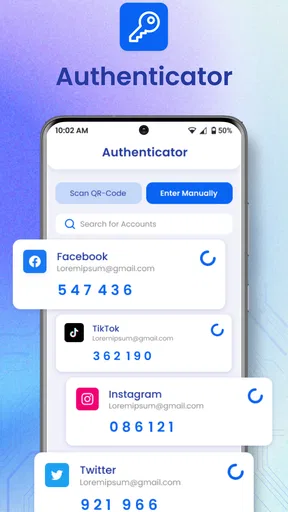
An authenticator is useful when it keeps the sign-in process short: open the app, find the right account, and enter the current code before it expires. The app’s store summary describes 2FA and multi-OTP account protection, but the practical benefit depends on how clearly you can identify each entry once you have several accounts saved. I’d name entries in a way that distinguishes, for example, a personal email from a work email rather than relying on a vague label.
For a single account, the extra step should feel manageable. With a longer list, scrolling and choosing the correct service become the real sources of delay, not the act of copying a code. I’d test the flow with a low-stakes account first, then add more only after I’m comfortable finding the right entry under time pressure. That small bit of organization can make an authenticator feel much faster in everyday use.
Getting Started with Authenticator Secure 2FA OTP
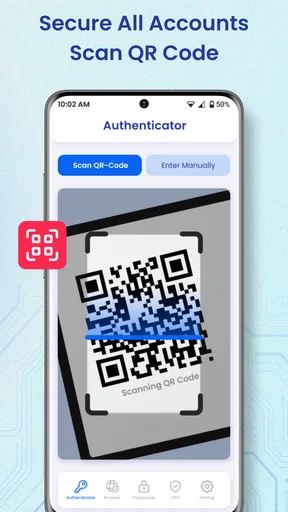
So, let's kick things off with the basics. I downloaded Authenticator Secure 2FA OTP on my Android, and right from the get-go, the setup was a breeze. The app is super user-friendly, which is a huge plus for someone who doesn’t have the time to navigate a tech maze. You just scan the QR code provided by the service you’re trying to secure, and boom! You’re rolling.
What I loved right away was how sleek the interface is. It’s clean and intuitive, so you’re not wasting time trying to figure out where to go next. Plus, it supports a multitude of accounts, from your email to social media and even your bank accounts. It’s like having a master key to your digital life, but one that only you can use.
The Security Features You’ll Appreciate
Okay, let's talk security because that’s why you’re here, right? The app uses a time-based one-time password (TOTP) system. This means every 30 seconds, a new code is generated. This makes it nearly impossible for anyone to beat the system, even if they’ve somehow snagged your password.
Another cool feature is the ability to back up your codes to your cloud storage. I know what you’re thinking—cloud storage and security? But it’s got that covered too with end-to-end encryption. So, even if someone were to access your cloud, those codes remain locked tight.
Worth Reading Before You Choose

Flipboard Shows What News Apps Must Do Beyond the Feed

Switching to Android Auto Means Rethinking Your Driving Routine

Google Calendar Makes a Crowded Week Easier to Manage

Ludo King Makes the Most of the Minutes Between Plans

Baby Panda World Brings Quick Play to Modern Phones, but Its Game Library Feels Busy

ESPN’s Live Game View Makes Following Close Games Easier
Using it in a busy day
A realistic test is a rushed morning when I need to sign in to a work account on a laptop while my phone is already in my bag. An authenticator can make that safer than relying on a text message, but only if I can unlock the phone, locate the right entry, and type the code before it changes. I’d keep the phone nearby during important logins and make sure the account labels are recognizable at a glance. If I’m often signing in from a shared or tightly managed work device, I’d also check that the organization permits authenticator apps before changing its security setup.
For travel or a spotty connection, the original article’s offline-access point is especially relevant: a generated code can be available without waiting for a text message to arrive. That does not remove the need to protect the phone itself. A lost, unlocked device is a different risk from a delayed SMS, so I’d use the phone’s own screen lock and avoid leaving the authenticator open when handing the device to someone else.
Who benefits, and where another option may fit better
I’d recommend this kind of app to someone who wants a dedicated place for sign-in codes and is comfortable keeping their phone close during account access. It can be a sensible fit for people separating personal and work logins, or for anyone who wants an extra step beyond a password without carrying a separate security key. If you only protect one account, the convenience gain may be modest; the main value is having a consistent process as more services ask for a second factor.
Compared with SMS verification, an authenticator avoids waiting for a carrier message and can be more practical when reception is poor. Compared with a hardware security key, it asks for no separate device, but it also means your code access depends on the phone and the app. A platform’s built-in password manager or a service-specific sign-in method may be a better fit if you want fewer apps or a login flow tied closely to that ecosystem. I wouldn’t choose this app simply because it combines several security tools; I’d first decide whether I want codes, password storage, or both in one place.
Why You Might Want to Give It a Try
If you’re juggling multiple accounts (and let’s be honest, who isn’t these days?), Authenticator Secure 2FA OTP can handle them all without breaking a sweat. I found the app particularly useful for managing my work and personal accounts in one place. No more flipping between apps or writing down codes on sticky notes.
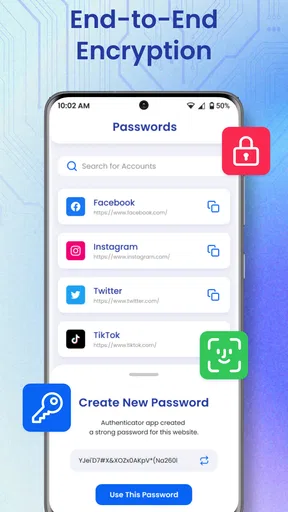
And here’s a gem: the app doesn’t just stop at securing your accounts. It also offers a handy password manager. Now, you can generate and store complex passwords within the same app. It’s like hitting two birds with one stone, er, app.
Keeping access dependable
Before moving an important account to any authenticator, I’d save that service’s recovery codes somewhere separate from the phone. That is a useful habit even when an app offers backup: recovery codes can help if the phone is unavailable, while an app backup is intended to preserve access to the authenticator’s stored information. I’d also confirm the account’s own recovery method works before relying on a new sign-in setup. This is less exciting than scanning a QR code, but it can prevent a stressful lockout.
If a code is rejected, I would first check that I selected the correct account entry and that the phone’s time is set automatically. TOTP codes depend on time, so a device clock that has drifted can cause trouble even when the saved entry is correct. I’d avoid deleting and re-adding an entry in a hurry: first check the sign-in service’s instructions and use its recovery route if needed. This careful sequence is a practical safeguard, not a claim that every failed code has the same cause.
For heavier use, the main strain is likely to be human rather than technical: a crowded list, unclear account names, or switching between devices while trying to sign in. I’d review old entries when I close accounts, but only after confirming the service no longer needs that second factor. Removing an entry too early can leave the account’s security settings and the authenticator out of sync. Keeping the list tidy is a small maintenance task that pays off when I need a code quickly.
A few trade-offs to consider first
The app’s current version is 2.5.6, and it requires Android 7.0 or later. That makes it worth checking the phone’s software before downloading, particularly if you keep an older handset as a backup. The listing shows an average rating of 4.3 from around 39,000 ratings, with 24 written reviews. I treat a rating as a broad signal rather than proof that the app will fit my own routine; my decision would still depend on whether I can safely back up access and identify entries without confusion.
The free starting point lowers the barrier to trying it, but the listed in-app purchases mean I’d check what is included before paying for anything. I wouldn’t assume a paid option is necessary for basic code generation, nor would I buy an upgrade without understanding exactly which task it addresses. If your priority is a no-cost, minimal setup, compare the free experience with the authenticator already offered by your phone platform or password manager before moving every account.
A Few More Things You’ll Love
- Offline Access: No internet? No problem. The app works offline, so you can still access your codes anywhere, anytime.
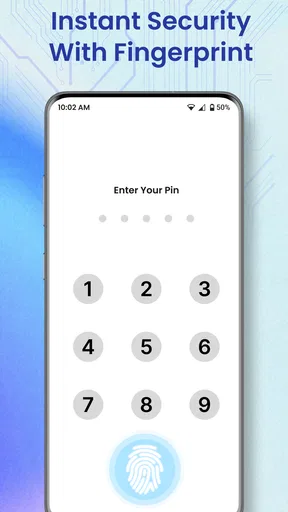
- Biometric Lock: If your phone supports it, you can lock the app with your fingerprint or face recognition for an added layer of security.
- Cross-Platform Availability: Whether you’re on Android or iOS, you can enjoy the same seamless experience.
Performance and device fit
I wouldn’t judge an authenticator by flashy speed claims. Its job is narrow, and the useful performance test is whether it opens when needed, presents the right entry clearly, and produces a code in time for the sign-in. For a short list of accounts, that workflow should be light on attention. A large collection can feel slower simply because it takes longer to find the right service, so readable labels and a deliberate order matter more than chasing a supposedly faster app.
As a House & Home app, it sits in an unusual catalog category for a security tool, so I’d focus on the actual fit rather than the label. It is free to install, rated for Everyone, and has passed the milestone of over one million installs. Those details make it easy to consider, but they do not replace the basic question: can I keep the phone and recovery information available whenever I need to sign in?
Final Thoughts
In a world where digital threats are lurking everywhere, having an app like Authenticator Secure 2FA OTP is like having a trusty shield. It’s efficient, secure, and incredibly easy to use. Whether you’re a tech guru or someone who just wants to keep their online life safe, this app has got your back.
If you’re ready to step up your security game, I highly recommend giving it a whirl. It’s like having a personal security guard for your phone, minus the intimidating look. So go ahead, download it, and breathe a little easier knowing your digital world is just a bit safer.
My practical verdict
I’d try it if I want account codes gathered in one place, understand the importance of keeping recovery options separate, and prefer using my phone over carrying a hardware key. I’d skip it, or compare alternatives first, if I need an organization-managed login method, want a security key that works independently of my phone, or dislike maintaining another app. It is not a substitute for a strong, unique password or careful account recovery planning.
My overall view is positive but measured: the appeal is convenience, with the usual authenticator trade-off that access depends on the device and the way I protect and recover it. Set up one account, confirm the sign-in and recovery steps, and then expand gradually. That gives me a much better sense of whether its everyday speed and workflow suit me than moving all my accounts at once.
Pros
- Easy setup with intuitive interface.
- Supports multiple accounts seamlessly.
- Offers both time-based and counter-based tokens.
- Offline functionality ensures constant access.
- Enhanced security with biometric lock option.
Cons
- No cloud backup for token recovery.
- Lacks integration with some services.
- No widget for quick access on home screen.
- Limited customization for token appearance.
- Occasional sync issues with certain devices.
FAQs for Authenticator 2FA OTP Backup
What is Authenticator Secure 2FA OTP and how does it work?
Authenticator Secure 2FA OTP is an app designed to enhance your online security by providing two-factor authentication (2FA). It generates time-based one-time passwords (OTP) that you use in addition to your regular passwords, adding an extra layer of protection to your accounts. This ensures that even if someone knows your password, they cannot access your account without the OTP.
Is Authenticator Secure 2FA OTP free to use, or does it have a premium version?
Authenticator Secure 2FA OTP is available for free, offering essential features to secure your accounts. However, it may also offer a premium version with added features such as cloud backup, advanced customization options, and priority support. Users can choose the version that best fits their security needs and budget.
How do I set up and use Authenticator Secure 2FA OTP with my accounts?
Setting up Authenticator Secure 2FA OTP is simple. First, download and install the app on your device. Then, go to the account you wish to secure and find the 2FA settings. Scan the QR code provided by the website or app within the Authenticator app. Once scanned, the app will generate a unique OTP for that account, which you’ll use for login verification.
What happens if I lose my device with Authenticator Secure 2FA OTP installed?
Losing your device with Authenticator Secure 2FA OTP can be a security concern. To prevent losing access to your accounts, it's recommended to back up your OTPs. Some versions of the app may offer cloud backup features. Alternatively, keep a written copy of your backup codes provided during the initial 2FA setup, which can be used to regain access.
Can I use Authenticator Secure 2FA OTP with multiple devices?
Yes, you can use Authenticator Secure 2FA OTP with multiple devices, though the process may differ. You need to set up the app on each device separately. For seamless access, use any provided cloud sync features, if available, to keep your OTPs synchronized across devices. Always ensure each device is secure to avoid unauthorized access.


